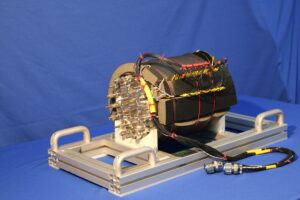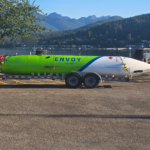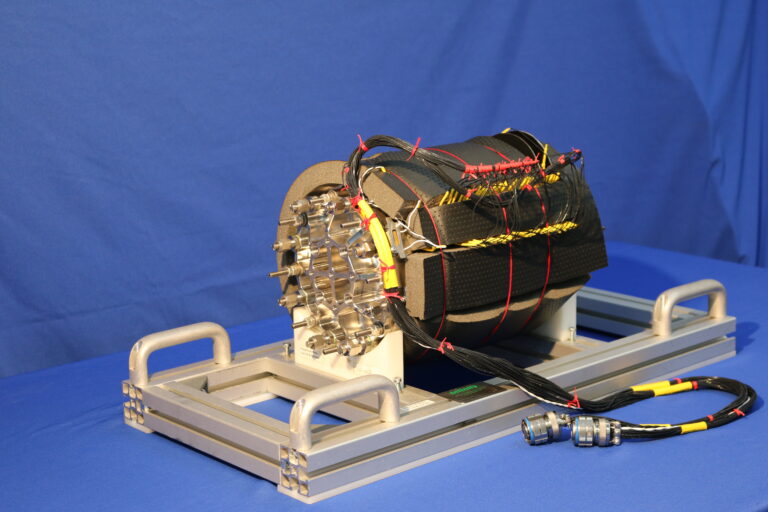
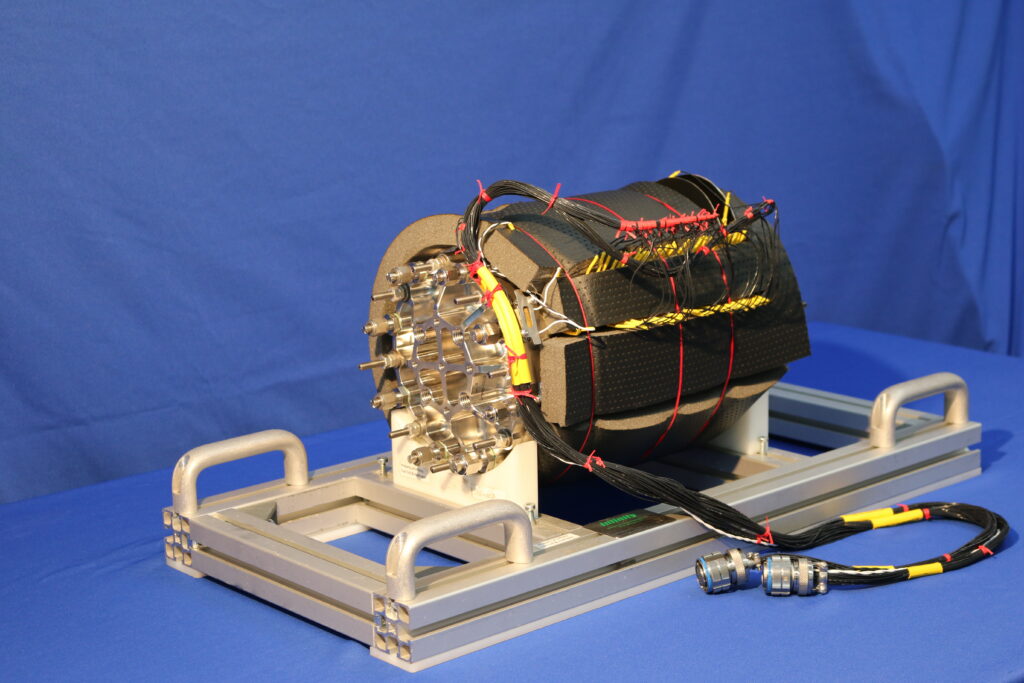
Infinity® Fuel Cell and Hydrogen, Inc. today announced the delivery of the most recent version of its 2K Lunar Regenerative fuel cell to NASA Glenn Research Center. The unit is a direct descendant from Infinity’s AMPES test hardware that flew and operated successfully on two Blue Origin sub-orbital space launches in 2022 and 2023. In those flights, the device became the first fuel cell to reach space on a commercial launch vehicle, and the first on any space launch since the retirement of the space shuttle.
The frigid lunar night is over 14 earth days long, and NASA has identified surviving it as their number one challenge. The regenerative power system uses excess solar energy collected during the lunar day to electrolyze water into hydrogen and oxygen during the lunar day. The regenerative fuel cell then converts those gases into electricity during the lunar night. The only by-products are heat and water, the latter of which is recycled. According to figures publicized by NASA, this process can save up to 700 million dollars per mission versus using batteries to store the excess solar energy for night use.
“The fuel cell we just delivered met all NASA performance requirements with excellent life characteristics,” said William F. Smith, founder and CEO of Infinity, “it brings NASA one step closer to a permanent footprint on the moon during the day and night!”